
Top-rated independent heating and cooling across California's Central Valley and the Sierra foothills
Inside a Proper Seasonal Tune-Up
You paid for a tune-up last spring and the AC still quit in July. So what did that visit actually do? A real maintenance visit is a set of measurements and cleanings that catch small problems early. It cannot make a worn compressor young again. Here is what gets checked, how often, and the signs your system is already past a tune-up.
Call (888) 381-2953- A real person answers
- Open 7 days
- Written quote before work starts
Taking calls until 5:00 PM PT
By our service team · vetted by the techs who do this daily
What Neglect Actually Does to a System
Nothing breaks all at once. A dirty filter starves airflow, so the indoor coil runs colder than it should and the blower works harder. Outside, dust and cottonwood pack the condenser fins until the unit cannot dump heat, which pushes head pressure up and shortens compressor life. Capacitors weaken quietly. Contactors pit. Drain lines grow sludge until water backs up into the pan and onto whatever is below. On the heating side, a cracked heat exchanger or a lazy igniter shows up as short cycling first. Two or three summers of that and you are replacing parts you would have kept with a yearly look.
What a Real Tune-Up Includes
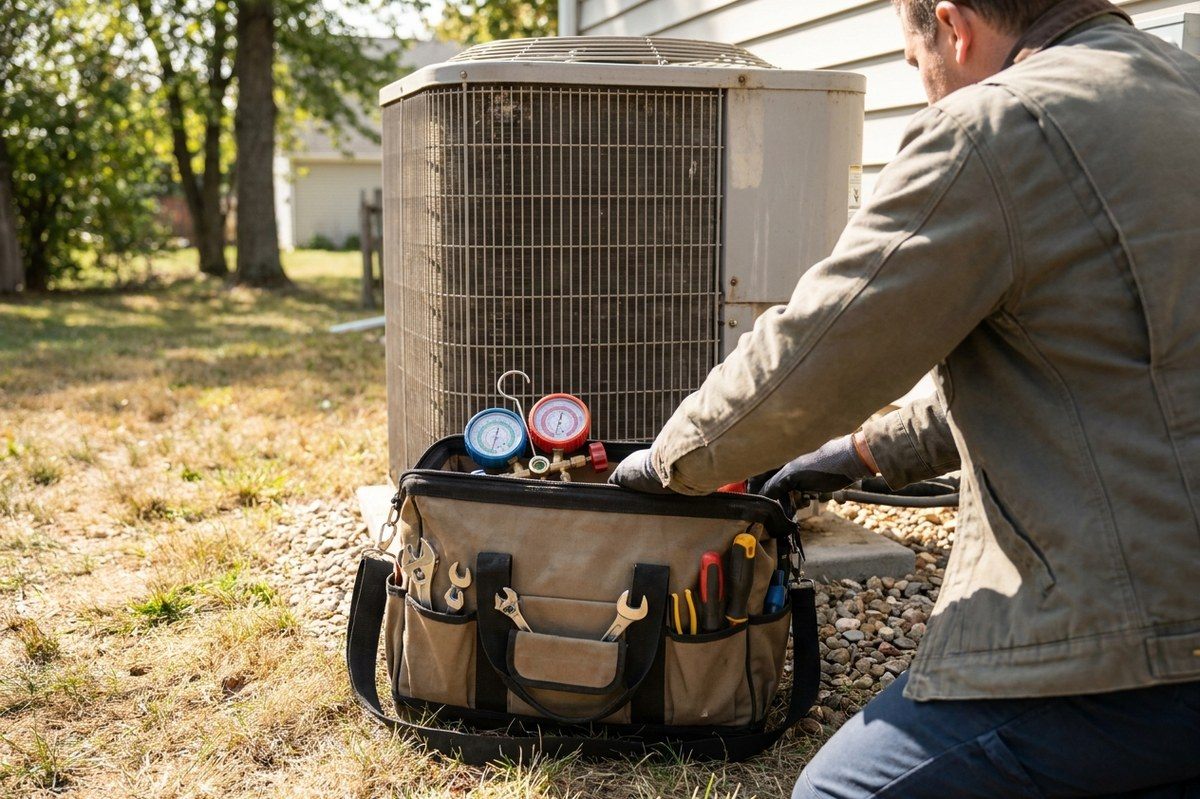
A proper visit is measurement, not just a rag and a smile. We read supply and return temperatures to confirm the split, check refrigerant pressures against the ambient conditions, test capacitor microfarads, and check amp draw on the compressor and blower motor. We wash the outdoor coil, clear the condensate drain, inspect the contactor and wiring for heat damage, and check static pressure to see if ductwork or the filter is choking airflow. On heating, we look at flame pattern, igniter and flame sensor condition, and inspect the heat exchanger. Then you get numbers, not adjectives, so you know what is trending wrong.
What a Tune-Up Will Not Fix
Maintenance finds problems and slows wear. It does not undo damage already done. If your compressor has scored bearings, if the coil has a leak, if the ducts are undersized for the house, no amount of cleaning changes that. A tune-up also will not make an old unit cool a room it never cooled, and it will not fix comfort problems that are really insulation or duct design. Be careful with anyone who promises a tune-up will drop your bill by some percentage. What it honestly buys you is fewer surprise breakdowns, cleaner airflow, and an early warning before a part fails on the hottest afternoon of the year.
How Often, and the Habit In Between
Once a year is the floor. Twice a year makes sense across the region, cooling checked in spring and heating checked in fall, especially for attic package units that sit in extreme heat all summer. Between visits your job is simple. Change the filter on a schedule you can remember, usually every one to three months depending on dust and pets. Keep two feet clear around the outdoor unit and rinse loose cottonwood and ag dust off the outside of the coil with a garden hose, power off. Keep supply and return vents open. Leave refrigerant, gas and high-voltage work to us.
Warning Signs It Is Already Too Late for Maintenance
Call for air conditioning repair rather than a tune-up if the unit runs constantly and never reaches setpoint, if the breaker trips repeatedly, if you hear a hard hum or grinding at startup, if ice forms on the lines, or if water is staining the ceiling below an attic unit. On heating, repeated shutdowns, a burner that will not light, or soot around the vents mean heater repair, not a checkup. If you smell gas or a carbon monoxide alarm sounds, get everyone out of the house first, then call 911 or your gas utility from outside, then call us. We handle furnace repair and AC repair across California and Nevada.
Inside a Proper Seasonal Tune-Up — straight answers
Is a tune-up worth it if my system is old?
Usually yes, but with different expectations. On an older system a visit is mainly about catching a failing capacitor, weak contactor or clogged drain before it strands you, and about giving you an honest read on how much life is left.
Do I need one visit or two per year?
Two is better if you use both heating and cooling hard. Cooling gets checked in spring before the long hot stretch, heating in fall. One visit a year is acceptable if the system is newer and lightly used.
My AC was tuned up and still failed. Why?
Maintenance lowers the odds of failure, it does not remove them. Parts like compressors and control boards can fail without warning signs a technician can measure. A good report should have told you which components were already trending weak.
How it works
- Step 1
Tell us the symptom
Call or fill in the quote form. We ask what changed, when it started, and what the thermostat reads. That tells us whether to bring parts for a cooling fault or a heating fault.
- Step 2
We diagnose on site
A technician checks the thermostat, the electrical side, airflow through the filter and coil, refrigerant pressures, and the outdoor unit. You get told what failed and why, in plain words, before anything is replaced.
- Step 3
Repair and verify
We make the repair, then run the system and measure the results at the vents. If a part needs ordering, we say so and give you a realistic window instead of a vague promise.
- A real person answers
- Open 7 days
- Written quote before work starts
Why homeowners call us
- Built for real valley heatWe work in areas where afternoons sit above 110 degrees and systems run for months without a break. That shapes how we size repairs, check capacitors and contactors, and judge whether a compressor is genuinely done.
- Attic and package unitsPlenty of homes across the region run attic air handlers or rooftop package units instead of a garage furnace and a side-yard condenser. We are used to the access, the duct runs, and the drain issues those setups bring.
- Dust and debris we expectAg dust, cottonwood fluff and grass clippings pack condenser coils and starve a system of airflow. We clean what we find and show you the difference, rather than adding refrigerant to a unit that just could not breathe.
- Heating too, not only ACFurnace repair, heat pump faults and no-heat calls get the same attention as summer work. Ignition problems, cracked or failing components and short cycling all get diagnosed before we recommend anything larger.
- All major brands, gas & electricFrom Carrier and Trane to Lennox, Goodman, Rheem and Bryant, serviced independently.
- Straight answersWhen a replacement beats a repair, we tell you, sometimes before we roll a truck.
About this guide
Safe checks done and it still misbehaves? That's a real fault
Tell us what you tried and what it did. The booking itself takes a minute.
- A real person answers
- Open 7 days
- Written quotes
- All major brands
- Gas & electric
Rather not call? Get a free quote →