
Top-rated independent heating and cooling across California's Central Valley and the Sierra foothills
Giving the Condenser Room to Breathe
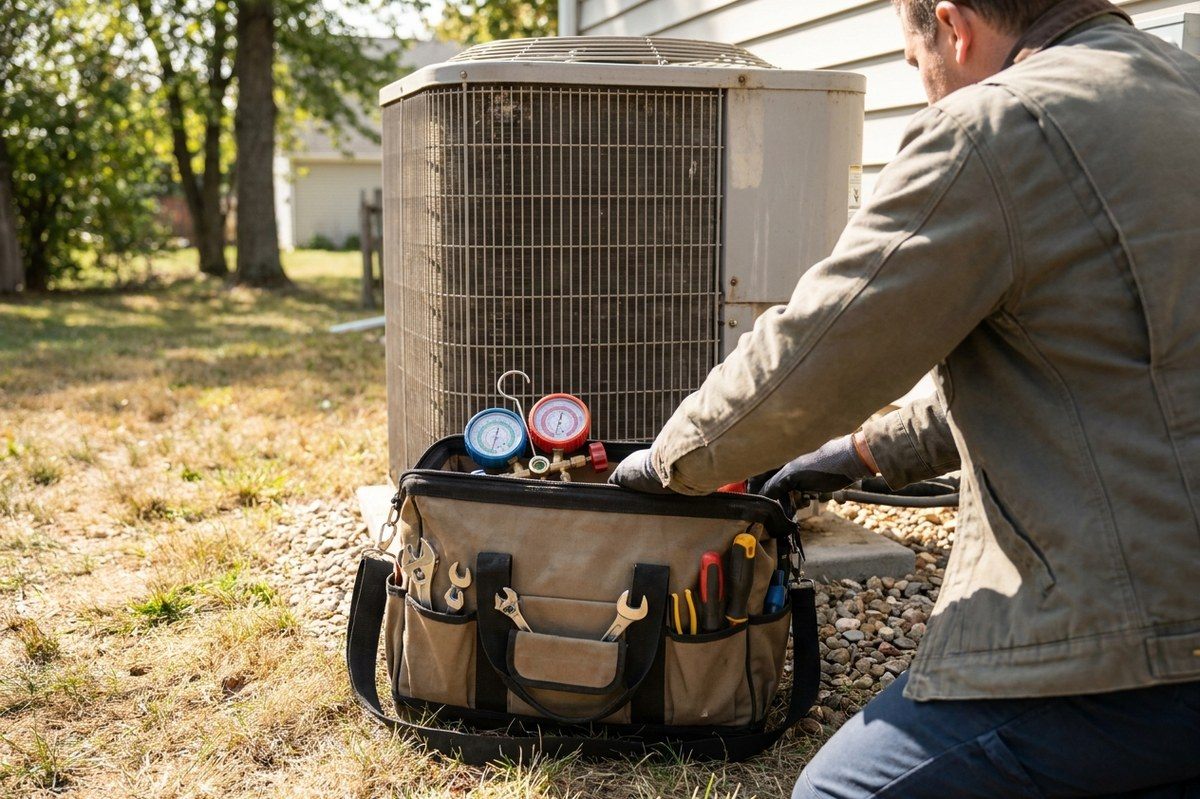
Your outdoor AC unit sits out back and you probably stopped noticing it years ago. Then the trash cans crept closer, a shrub filled in, and somebody stacked firewood against one side. That box needs open air to dump heat outside. Here is what belongs around it, what does not, and how to tell when the crowding has already cost you.
Call (888) 381-2953- A real person answers
- Open 7 days
- Written quote before work starts
Taking calls until 5:00 PM PT
By our service team · vetted by the techs who do this daily
What Crowding Actually Does to the Unit
The outdoor unit works by pulling air across a coil and throwing heat into the yard. Block that airflow and the heat has nowhere to go, so the unit recycles its own hot exhaust. Pressures climb, the compressor runs hotter and longer, and on a 108-degree afternoon the system may trip out on high pressure and leave you with warm air inside. Over a few seasons that added strain shows up as a failed capacitor, a burnt contactor, or a compressor that gives up early. Nothing dramatic happens on day one. That is why crowding gets ignored until the air conditioning repair call.
How Much Space and What Belongs There
Aim for about two feet of clear space on every side of the outdoor unit and five feet of open sky above it. Gravel, bare dirt, a concrete pad, or short trimmed grass all work fine underneath. What does not belong: trash cans, patio furniture, pool chemicals, firewood, potted plants, bikes, or a tarp thrown over it in winter. Fencing is fine if it has real gaps and stands back from the cabinet. Climbing vines are not fine, because they grow into the fins and hold moisture against metal. Keep dryer and irrigation runoff away from the base too.
The Habit That Prevents Most of It
Walk out to the unit once a month during cooling season with the system off at the thermostat, and look. Pull the leaves, seed fluff, and grass clippings off the sides. Sweep the cottonwood and ag dust film off the lower fins with a soft brush if it lifts easily. Cut back anything within two feet. That is a five minute lap around the cabinet, and it is the only outdoor work we ask homeowners to do themselves. Anything past clearing debris, meaning panels, wiring, refrigerant lines, or the fan motor, is ours. Also swap your indoor filter on schedule, since a starved blower makes the outdoor unit work harder.
Signs the Crowding Has Already Cost You
Call for air conditioner repair when the unit runs constantly but the house never reaches the setpoint, when the outdoor fan cycles off and on every few minutes, or when the breaker trips in the heat of the afternoon. Ice on the refrigerant lines, a burning smell near the cabinet, or a hard hum without the fan turning are all signs to shut the system off at the thermostat and stop running it. Bent or blackened fins, standing water at the base, and grass grown up through the bottom mean the damage started a while back. We serve homeowners across California and Nevada and can look at it.
Winter, Heating Season, and the Same Rules
If you have a heat pump, the outdoor unit runs in winter too and needs the same clearance, plus room for defrost water to drain away instead of pooling and refreezing. Do not wrap or cover it. A cover traps moisture and gives rodents a nest with easy access to wiring. For gas furnaces and attic package units, keep the clearance rules in mind for the vents and intake as well. If you ever smell gas or a rotten egg odor, leave the building right away, call 911 or your gas utility from outside, then call us for the heating repair once the site is clear.
Giving the Condenser Room to Breathe — straight answers
Can I hose down the outdoor unit myself?
Rinsing loose debris off the outside with a garden hose on low pressure is generally harmless, but a real coil cleaning means pulling panels and working near high voltage. Leave that to us. Never use a pressure washer on the fins.
Does shade over the unit help it run better?
A little shade from a distance is fine, but the tree or awning must not restrict airflow into or out of the cabinet. Overhanging branches drop leaves and seed fluff straight into the coil, which costs you more than the shade gains.
Should I cover the outdoor unit in the off season?
We do not recommend it. Covers hold moisture against the coil and invite rodents to nest in the wiring. If your unit is a heat pump it needs to run all winter anyway. Just keep the area clear.
How it works
- Step 1
Tell us the symptom
Call or fill in the quote form. We ask what changed, when it started, and what the thermostat reads. That tells us whether to bring parts for a cooling fault or a heating fault.
- Step 2
We diagnose on site
A technician checks the thermostat, the electrical side, airflow through the filter and coil, refrigerant pressures, and the outdoor unit. You get told what failed and why, in plain words, before anything is replaced.
- Step 3
Repair and verify
We make the repair, then run the system and measure the results at the vents. If a part needs ordering, we say so and give you a realistic window instead of a vague promise.
- A real person answers
- Open 7 days
- Written quote before work starts
Why homeowners call us
- Built for real valley heatWe work in areas where afternoons sit above 110 degrees and systems run for months without a break. That shapes how we size repairs, check capacitors and contactors, and judge whether a compressor is genuinely done.
- Attic and package unitsPlenty of homes across the region run attic air handlers or rooftop package units instead of a garage furnace and a side-yard condenser. We are used to the access, the duct runs, and the drain issues those setups bring.
- Dust and debris we expectAg dust, cottonwood fluff and grass clippings pack condenser coils and starve a system of airflow. We clean what we find and show you the difference, rather than adding refrigerant to a unit that just could not breathe.
- Heating too, not only ACFurnace repair, heat pump faults and no-heat calls get the same attention as summer work. Ignition problems, cracked or failing components and short cycling all get diagnosed before we recommend anything larger.
- All major brands, gas & electricFrom Carrier and Trane to Lennox, Goodman, Rheem and Bryant, serviced independently.
- Straight answersWhen a replacement beats a repair, we tell you, sometimes before we roll a truck.
About this guide
When the easy checks change nothing, it's time for a tech
Describe what you found and we'll take it from there. Booking takes about a minute.
- A real person answers
- Open 7 days
- Written quotes
- All major brands
- Gas & electric
Rather not call? Get a free quote →